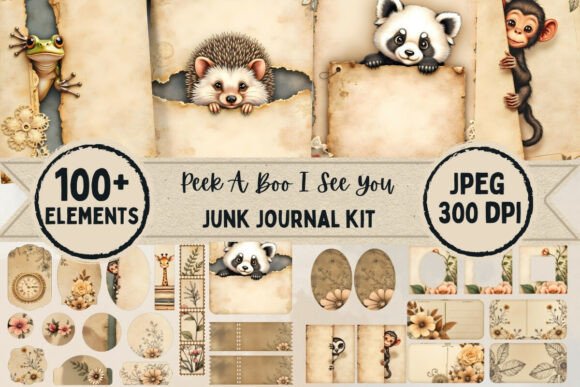
Peek-a-Boo I See You Junk Journal Kit: A Deep Dive
When you first open the Peek-a-Boo I See You Junk Journal Kit, it feels less like opening a file and more like discovering a forgotten box of treasures in an antique shop. This isn’t just a collection of digital assets; it is a fully realized design asset ecosystem that bridges the gap between the tactile warmth of vintage paper crafting and the precision of modern digital design. For content creators, graphic designers, and scrapbookers alike, the challenge often lies in finding elements that feel authentic rather than sterile. This kit solves that problem by offering a curated library of over 100 high-resolution JPEG elements that bring a distinct, playful personality to any project.
The Aesthetic: Blending Whimsy with Vintage Textures
The core appeal of the Peek-a-Boo I See You Junk Journal Kit lies in its successful marriage of two often disparate styles: cute animal illustration and distressed, antique paper textures. We see this in the way a hedgehog or panda peeks out from behind a digitally aged paper frame. The visual style is characterized by a warm, nostalgic color palette—think sepia tones, muted florals, and the soft grain of old newsprint.
From a design perspective, this kit acts much like a specialized serif font or a handwritten font in terms of tone. Just as a script font conveys elegance, these elements convey warmth and approachability. The "torn-paper" effects are particularly noteworthy; they add a layer of physical depth that is crucial for mixed-media collage. Unlike flat graphics, these elements suggest texture and history, making them perfect for brand identity work that requires a "human touch" or a "homemade" feel without sacrificing professional quality.
Strategic Applications: Where This Kit Shines
Understanding where to deploy the Peek-a-Boo I See You Junk Journal Kit is key to maximizing its value. While it is an obvious choice for physical junk journaling, its utility extends far deeper into professional design assets usage.
- Editorial and Publishing Design: For publishers and bloggers, these elements serve as excellent spot illustrations for lifestyle articles, children’s book reviews, or vintage-themed blog posts. They can break up text blocks effectively, acting as visual anchors that improve the reader's experience without overwhelming the typography.
- Marketing and Social Media: In a digital landscape dominated by sleek, minimalist sans serif fonts and clean lines, this kit offers a refreshing contrast. Marketers can use the elements as backgrounds for social media graphics or as part of a "scrapbook" style Instagram story layout. This approach works exceptionally well for brands targeting parents, educators, or artisan markets.
- Product Packaging: For small business owners creating packaging design for handmade goods (soaps, candles, stationery), these elements provide a cohesive vintage look. Using a frog peeking out from a label or a monkey clinging to a tag adds a whimsical charm that generic clip-art cannot match.
Integrating with Modern Typography
A common pitfall in using vintage or whimsical elements is clashing with modern typography. However, the Peek-a-Boo I See You Junk Journal Kit is surprisingly versatile when it comes to font pairing. Because the backgrounds are often distressed and neutral, they can ground even the most aggressive display fonts.
For instance, pairing a bold, geometric modern typography style with a torn-paper background creates a dynamic contrast—modern meets antique. Conversely, pairing the kit with a classic premium font serif style reinforces the vintage narrative. The key is visual hierarchy. The kit elements are detailed, so they generally work best alongside cleaner typefaces. If you use a highly decorative creative font, the design might become too busy. I recommend using the animal elements as focal points and keeping your typography clean to ensure readability.
Practical Workflow and Commercial Use
For the entrepreneur or designer, the technical specifications matter as much as the aesthetics. The kit is delivered in high-resolution 300 DPI JPEG format, which is the industry standard for print quality. This ensures that whether you are printing a planner insert or scaling an image for a web banner, the integrity of the image holds up.
One practical piece of advice: treat these elements like a premium font family. Just as you would review a font's licensing for commercial use before using it in a logo design, ensure you understand the rights associated with these assets. The kit is listed for both personal and commercial use, which is a significant advantage for small business owners. You can create printable ephemera packs to sell on Etsy or use the assets in client work for scrapbooking businesses without legal ambiguity.
When testing the fit for a project, I suggest creating a "mood board" first. Drop the JPEGs into your layout alongside your chosen fonts. Look at the edges—the torn-paper effects need to blend seamlessly with your background color. If you are using a white background, the vintage yellowing of the paper adds beautiful contrast. If you are using a dark background, you may need to utilize the frames and tags to contain the imagery.
Final Thoughts on Creative Potential
The Peek-a-Boo I See You Junk Journal Kit is more than just a set of pictures; it is a toolkit for storytelling. In an era where brand identity often relies on authenticity, these hand-drawn, vintage-styled animals offer a way to connect with an audience on an emotional level. They evoke nostalgia, innocence, and playfulness.
Whether you are a hobbyist assembling a memory book or a content creator looking to differentiate your digital journal business, this kit provides the raw material to build something truly unique. It encourages a design philosophy that values warmth over perfection and personality over sterility. By combining these assets with strong typography and a clear design strategy, you can elevate a simple project into a memorable piece of art.